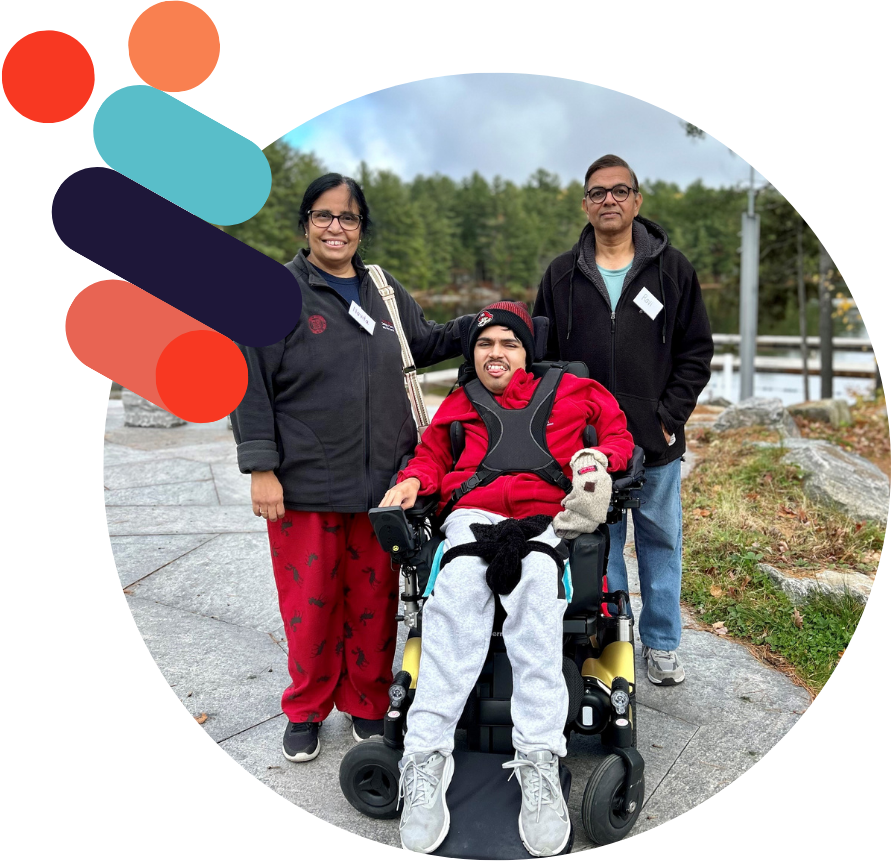
Neuromuscular disorders (NMDs) affect both voluntary muscles, like those you control when walking or moving your arms, and involuntary muscles, like the heart and those in the stomach and intestines.
This overview is a starting place for learning about their causes, types, and symptoms.
What causes neuromuscular disorders?
Neuromuscular disorders occur when the connection between the muscles and the nervous system is disrupted. They can be caused by:
Genetic mutations: Changes in DNA that are inherited from a parent or that occur spontaneously, meaning they have no known cause.
Autoimmune responses: The body’s immune system mistakenly attacking its own tissues. Myasthenia gravis and Guillain-Barré syndrome are examples of NMDs caused by autoimmune responses.
Types of neuromuscular disorders
There are hundreds of neuromuscular disorders. Generally, they fall into the following groups:
Muscular dystrophies: A group of genetic conditions causing progressive muscle weakness and degeneration
Myopathies: Disorders affecting the muscle fibres. They can be either inherited or immune-mediated.
Neuromuscular junction disorders: Disorders such as myasthenia gravis that disrupt nerve-to-muscle connection.
Peripheral neuropathies: Disorders affecting motor and sensory nerves, leading to weakness, pain, and numbness.
Lower motor neuron disorders: Disorders affecting the nerve cells that control movement.
You are not alone
Neuromuscular disorders are individually rare, but collectively common. We provide support to more than 27,000 people and families affected by neuromuscular disorders in Canada.
Neuromuscular disorders are individually rare, but collectively common. We provide support to more than 27,000 people and families affected by neuromuscular disorders in Canada.
NMDs can affect anyone, at any age. Some types appear in infancy or early childhood, while others may not develop until adulthood.
The type of NMD can affect when symptoms begin, how noticeable they are, how quickly they get worse, and whether they can be passed down to family members.
Symptoms of NMD can include any or some of the following:
Poor balance with frequent falls
Muscle weakness
Difficulty walking or running
Difficulty performing sports
Difficulty going up stairs
Difficulty rising from a chair or getting up from lying position
Difficult getting on or off the toilet
Difficulty raising or keeping your arms up
Loss of function, muscle loss, soreness, cramps or pain
Fatigue, daytime sleepiness or morning headaches
Difficulty breathing including or especially when lying down